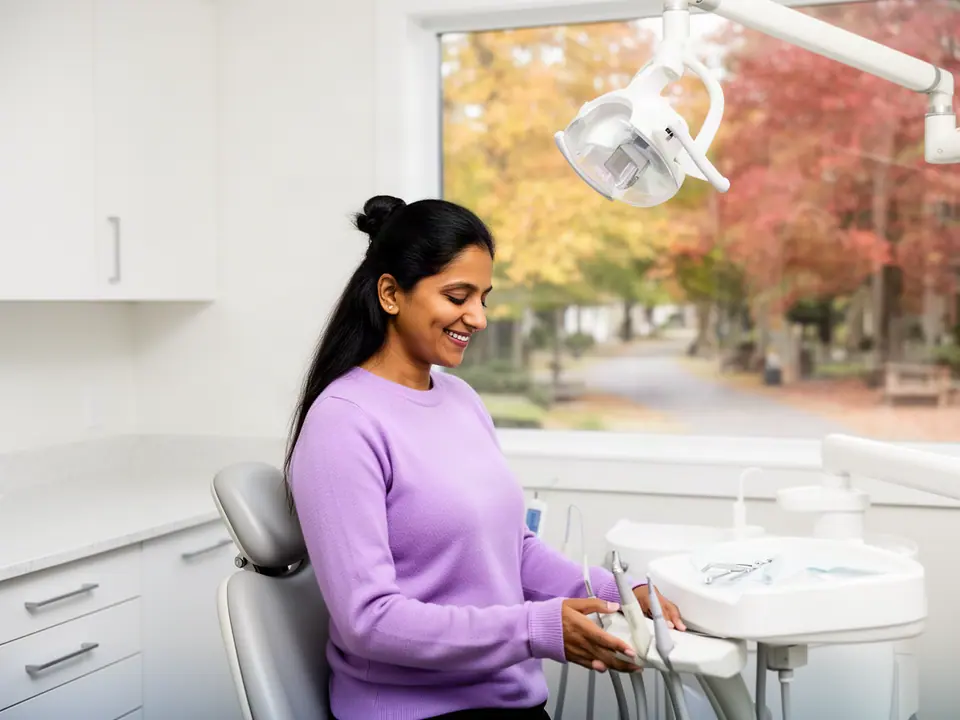
A dental practice loan in Columbia, MD pays for a specific project: a new operatory, imaging or scanning equipment, a larger suite, or a partner's buy-in. Which comes first is the dentist's call, and comparing each project's monthly payment with the cash it should add is a sound way to decide. Once the project is chosen, Minthollow Financial forwards the request and its quotes to funding partners.
Ranking dental projects by payment and added cash, with the reports partners ask Columbia, MD offices for.
A second operatory, an intraoral scanner or a partner buy-in: ranking the projects
Each of these projects borrows against a different kind of future. An extra operatory lets the office see more patients in the same hours. A scanner changes how impressions are taken and how many cases need a remake. A buy-in brings a partner who shares the profit and, eventually, the workload. Putting them side by side keeps the office from financing the most exciting project instead of the one the schedule can carry.
| Project | Cost | Term and annual rate | Monthly payment | Added monthly cash | Cash per $1 of payment |
|---|---|---|---|---|---|
| Second operatory | $72,000 | 60 months at 9.75% | $1,520.95 | $6,200 | $4.08 |
| Intraoral scanner | $34,000 | 48 months at 9.75% | $858.25 | $1,450 | $1.69 |
| Partner buy-in (30% stake) | $240,000 | 84 months at 9.25% | $3,891.90 | $5,900 | $1.52 |
In this invented case the second operatory returns about $4.08 of added cash for each dollar of payment, and the 30% partner buy-in only about $1.52, because a stake in the practice is paid for over years before the new partner's share of profit catches up. The order would differ for an office whose chairs sit empty on Fridays, which is why the "added monthly cash" column has to come from the office's own schedule, not from a vendor brochure.
A buy-in also raises questions a chair purchase does not: how the stake is valued, whether the incoming dentist pays a lump sum at signing or buys in gradually from compensation, and what happens if the partnership ends. A partner reviewing a buy-in loan reads the partnership agreement and the practice valuation, and it looks at the incoming dentist's own production history as well as the practice's. An operatory or scanner request needs none of that, which is one more reason it can come first.
Equipment loans for chairs and imaging in a Columbia, MD office
Chairs, delivery units, lights, sensors, panoramic and cone-beam units, milling machines and scanners are the kind of equipment a partner can finance with the equipment itself as collateral. The vendor's written quote is the starting point: model numbers, installation, training, and the warranty or service plan as separate lines.
Offices of dentists are a sizable employer group in Howard County, MD: 214 establishments with paid staff and 1,454 employees in the 2023 County Business Patterns, which works out to about 6.8 people per office and $65,017 of annual payroll per employee in our arithmetic. In ZIP 21044, which covers only part of Columbia, MD, 23 dental offices had a physical address. With payroll at that level, paying cash for a scanner can pull money the office needs for staff.
Chairs, CBCT units and other dental machines have their own section on the equipment financing page, and the dental practices page breaks down the county's dental payroll figures.
Movable equipment costs when a Howard County, MD dentist moves to a larger suite
A larger suite needs clinical equipment, movable cabinetry and computers, plus overlap between leases. Fixed plumbing, vacuum and compressed-air lines, electrical work and built-in cabinetry are excluded; any landlord allowance for fixed property work is handled separately.
Illustration only, invented figures: an office paying $6,800 a month moves to a suite at $11,200, and both leases overlap for 3 months while equipment is delivered and staff prepare the space. Rent alone during the overlap comes to $54,000, before a single new patient is seen in the larger space.
That overlap is a cash cost, not equipment, so it belongs in a term loan for the move or in a line of credit drawn during setup and paid down once the new operatories fill.
Production reports and collections data a dental lender asks to see
Funding partners set their own requirements for dental offices. The reports below are what a request commonly includes, because they let a partner see production, collections and the schedule without a site visit.
- Production by provider and by procedure category for the last 12 to 24 months.
- Collections compared with production, month by month, so the collection ratio is visible.
- An aging report of unpaid insurance claims and patient balances, kept in two separate columns.
- The payer mix: share of revenue from insurance plans, membership plans and fee-for-service patients.
- Schedule data: hygiene and doctor days booked versus open, and new patients per month.
- The equipment quote and the current lease.
Practice-management software can export these reports. When the reports are ready, the request form sends the details to Minthollow Financial. More articles for Columbia, MD offices are on the blog.
By Minthollow Financial · Updated